On-demand Webinar: 2026 Early Careers Trends
Catch up with TST’s Chief Innovation Officer Dr. Khairunnisa Mohamedali for a deep-dive session into the newly-released 2026 Early Careers Trends...
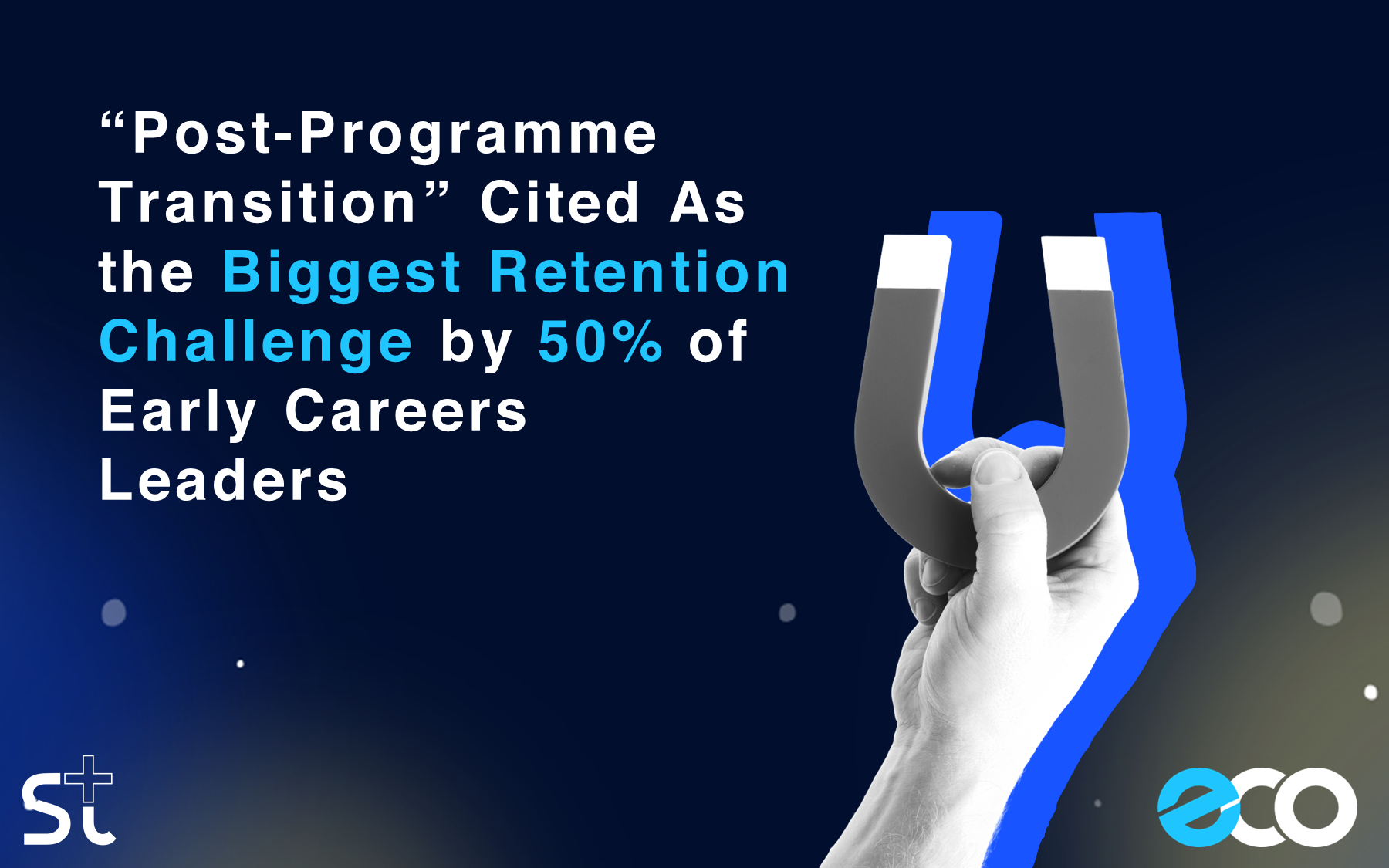
New findings show that the strongest predictor of long-term retention is not salary or training budget alone, but the extent to which organisations make their Early Careers hires feel supported, recognised, and part of something bigger.
Retention remains the defining test of Early Careers success, but what factors drive retention the most? In a recent survey published by ECO and The Smarty Train, 50% of Early Careers leaders named "Progression & Post-Programme Transition" as their single biggest issue when asked about their top retention challenges.
The report revealed that organisations with a clear plan to help graduates progress into their next role retained 7%pt more of their cohorts after three years, reflecting a growing awareness that retention issues often begin when structured support ends.
But what driving factors are contributing to long-term retention? ECO research reveals that alongside structured strategies for post-programme progression, recognition and engagement stood out as factors that retain significantly more Early Careers talent over three years.
Structured progression:
Organisations with a clear plan to support graduates into their next role retained 7% more Graduates after three years: 73% vs. 66%. This demonstrates that graduates who see a pathway beyond their programme are more likely to stay and grow within the organisation.
This is an important shift. It shows that retention is not just about keeping Early Careers comfortable during a programme, but about enabling momentum and purpose afterward.
Recognition:
Structured recognition also makes a measurable difference. Functions that recognise graduates through awards, high-performer initiatives, or cash-related incentives retained 10% more graduates at three years (75.5% vs. 65.4%) than those that did not. Recognition signals value and reinforces engagement, especially at a stage where graduates may otherwise feel disconnected.
Shorter programmes:
One of the more surprising findings from the study demonstrated that programmes shorter than two years were associated with higher retention at Year 3. This suggests that prolonged programmes may reduce urgency or clarity around next steps, while shorter, sharper experiences help graduates transition clearly into meaningful long-term roles.
The data that informed the 2026 Early Careers Trends Report was collected from over 30 leading global organisations using TST’s Early Careers Optimiser (ECO) methodology. For more information on how ECO has helped organisations build data-driven, human-centred strategies for their Early Careers, talk to our data experts.
Early Careers Retention represents only part of the challenges facing Early Careers functions in 2026 and beyond. For a comprehensive understanding of all five trends shaping Early Careers, download the 2026 Early Careers Trends Report, which includes additional insights, case studies, and actionable recommendations.